Year 1 Mathematics Number & Algebra Daily Review
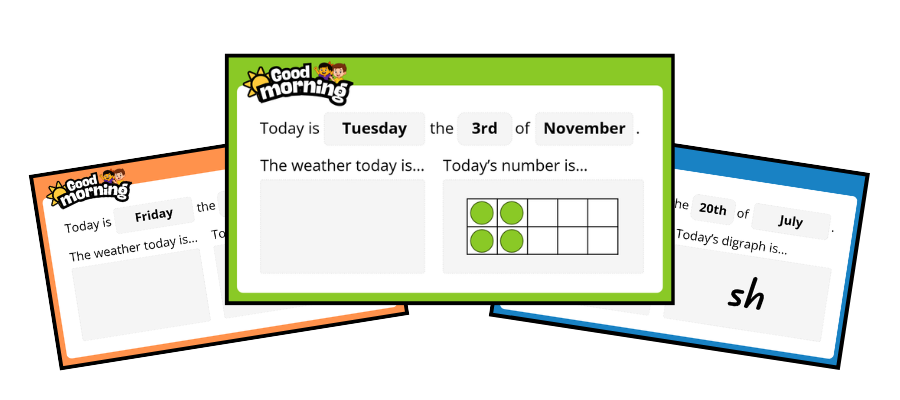
Short and sharp daily review slides targeting Year 1 Number and Algebra.
Learning Areas: Mathematics
Format: PowerPoint
Year Levels: Year 1
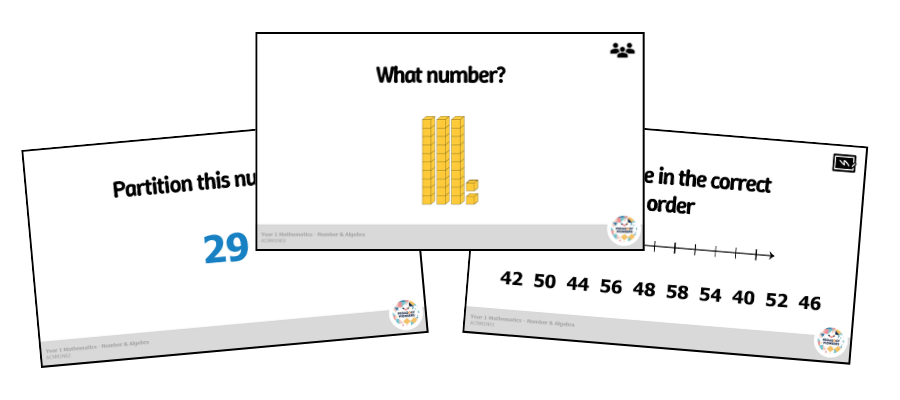
This resource provides teachers with 240+ questions aligned with the Mathematics learning area of the Australian Curriculum (Version 9).
Versatile and minimal design
This resource can be utilised in a variety of ways, promoting teacher agency in how it is delivered to students. Whilst created to be used as a 10-minute daily review at the beginning of mathematics lessons, they could be used as a form of diagnostic assessment in a conferencing format, or as an exit ticket for students to complete at the end of a lesson. In the top-right corner of each slide is an icon showing how we recommend you deliver the slide to students.
Curriculum alignment
Each slide includes the content descriptor code to which it is aligned. This makes it easy for the teacher to identify which aspect of the curriculum is being covered in each question.
Questions provided in varying formats
Where possible, each question is provided in a variety of formats. Some questions are presented in a written mode, whereas others utilise visual or graphical representations of numbers/problems.
Informed by contemporary research
This resource has been designed in such a way that aligns with aspects of Cognitive Load Theory and the Science of Learning, such as interleaving, spaced retrieval practice and dual coding.
Two files provided
In this purchase are two versions of the same PowerPoint presentation:
- Master Deck – Questions are provided in order of content codes.
- Daily Review – Questions are organised into days. Each day consists of a mixture of questions from across the included strands.