Pedagogy Pioneers

The science of learning, in everyday practice

Daily
Review.

Small routines.
Lasting learning.

A teacher's field guide to purposeful retrieval,
manageable challenge and responsive mathematics teaching.

PLAN WITH PURPOSE. TEACH WITH CLARITY.

Not more questions. More purposeful practice.

Make yesterday's learning
available for tomorrow.

Daily Review is a brief, low-stakes return to previously taught knowledge and skills. Students think, retrieve and respond; you check understanding and decide what needs another look.

RetrieveThink before the answer.
ReconnectReturn across time.
RespondLet evidence guide you.

For primary mathematics teachers An introduction, not a prescribed programme

Pedagogy Pioneers Teaching fieldnotes / Mathematics

01 / Understand the learning

Remembering is
part of learning.

A useful routine is built around how learning happens,
not simply how many questions fit on a slide.

The Science of Learning draws on evidence about attention, memory and learning. These principles inform the routine; they are not a guarantee that every review activity will be effective.

01

Retrieve, rather than only reread. [1]

Ask students to bring prior learning to mind before showing the answer. Recall a fact, explain a step or complete a familiar problem. Multiple-choice options provide cues, so follow a choice with a reason or an uncued example when useful.

02

Space opportunities across time. [1]

Return to important ideas across days and weeks, rather than putting all practice into one sitting. Adjust the gap using students' responses; there is no single spacing schedule that suits every skill and learner.

03

Mix with a purpose. [5]

Once methods are familiar, interleave selected problem types so students practise deciding which approach fits. Randomising a deck is not the same as deliberately contrasting strategies. Secure the basics before increasing the mix.

04

Make thinking visible, then give feedback. [4]

Collect responses from everyone, check reasoning and correct misunderstandings. Later, ask students to retrieve the idea again. Smooth performance today is not proof of durable learning or transfer to a new context.

Put it into practice

Revisit recent, older and less-secure learning. Save review links and plan when to return: the slideshow does not automatically schedule spaced retrieval or a purposeful interleaved sequence.
Pedagogy Pioneers Teaching fieldnotes / Mathematics

02 / Plan for cognitive load

Keep the thinking.
Remove the clutter.

Manage the demand, without removing
the mathematics students need to think about.

Working memory is limited when processing unfamiliar information. Well-organised knowledge in long-term memory can make familiar tasks less demanding. What is manageable depends on what each learner already knows. [2]

Manage intrinsic demand

Match the task to prior knowledge.

Check prerequisite facts, language and representations. Break a complex procedure into meaningful steps before adding another demand.

A routine task for one student may be complex for another.

Reduce extraneous demand

Make key information easy to find.

Keep labels close to diagrams. Remove irrelevant images, excess wording and switching between sources. Explain a visual without a duplicate script.

Clear presentation supports the thinking.

In the slideshow: one task, one view

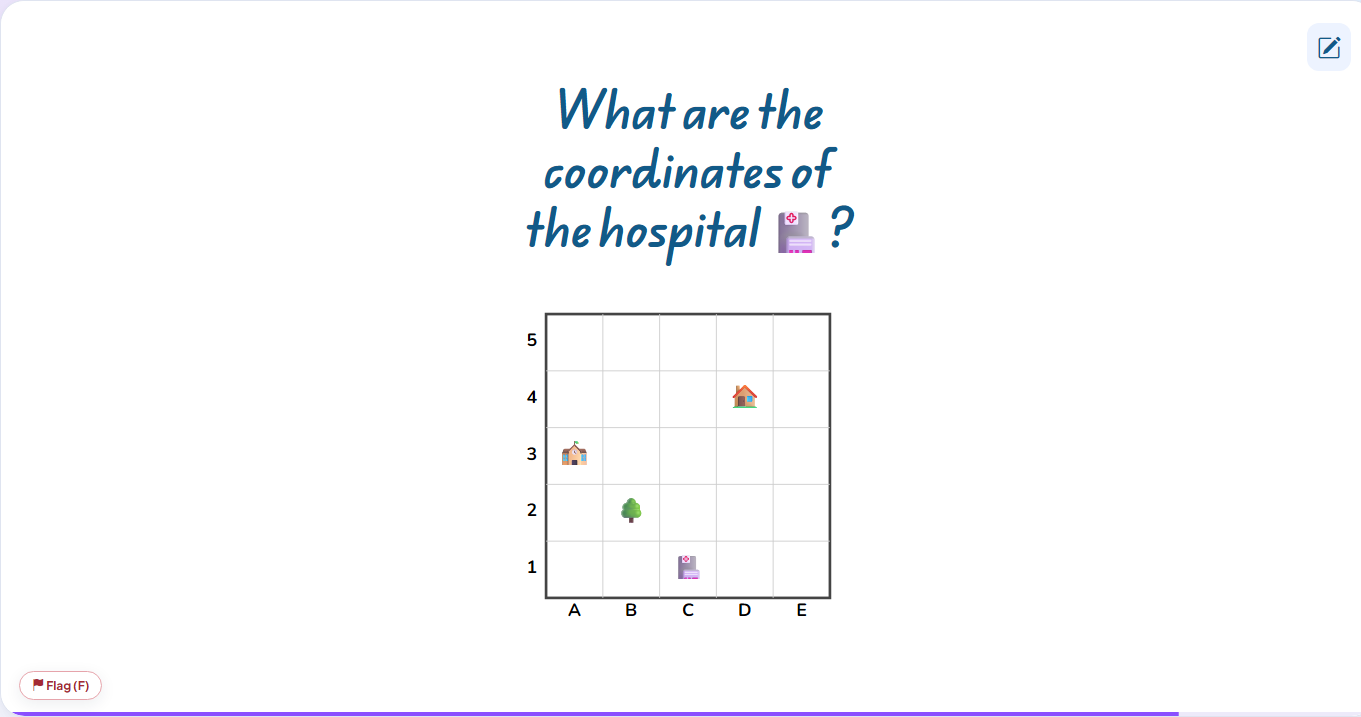
Demo question 6: the hospital coordinates prompt sits above a labelled grid; a writing-response icon appears at the top right.
Real demo / Question 6

Prompt and grid stay together.

Students can inspect the labels without switching to another page. The writing icon cues a written response.

Your decision: check that grid references and notation have been taught. A clear layout does not make unfamiliar content suitable.

Before presenting: check the full prompt, options and visual, then readability from the back. Use Focus mode or text-size controls if needed. A 50-question deck is a resource bank, not a requirement to finish every item.

This guide's decoration marks sections. On student question slides, keep attention on the task and avoid unnecessary visual competition.

Pedagogy Pioneers Teaching fieldnotes / Mathematics

03 / Teach the routine

Every learner thinks.
Every learner responds.

A predictable sequence lets attention stay
on the mathematics, not on what happens next.

Explain and rehearse the response cues. Keep the review low-stakes, give adequate thinking time and scan the whole class rather than relying on volunteers. [1] [4]

1

Pose

Make the task clear.

Read or clarify the prompt. Orient students to the important part of a diagram without giving away the solution.

2

Pause

Protect the thinking.

Allow quiet retrieval time before answers are visible. Ask students to hold their response until the shared cue.

3

Respond

Hear from everyone.

Collect a simultaneous response. Ask a few students how they know; a correct choice alone may hide a guess.

4

Reveal & respond

Check, then act.

Reveal the answer and explain a key step. Decide whether to move on, clarify now or flag for explicit reteaching.

Choose the response that reveals the learning

SAY IT

Brief, familiar recall

Use a choral response after thinking time. Follow up individually when a chorus could conceal uncertainty.

SHOW IT

A choice on cue

Use fingers for answer options, or an accessible alternative. Ask for the rule or reason, not just its number.

WRITE IT

A method or explanation

Use mini-whiteboards or paper to see a calculation, representation or step in students' reasoning.

“Think first. Hold your answer.
Show me together. How do you know?”

A response cue to teach and reuse
Pedagogy Pioneers Teaching fieldnotes / Mathematics

03 / The routine in action

The controls support you.
You lead the learning.

Use the classroom view to protect thinking time,
cue responses and check the reasoning.

Here is the routine applied to a real demo question. Choose examples that match prior teaching; the demo is not a recommended sequence for every class.

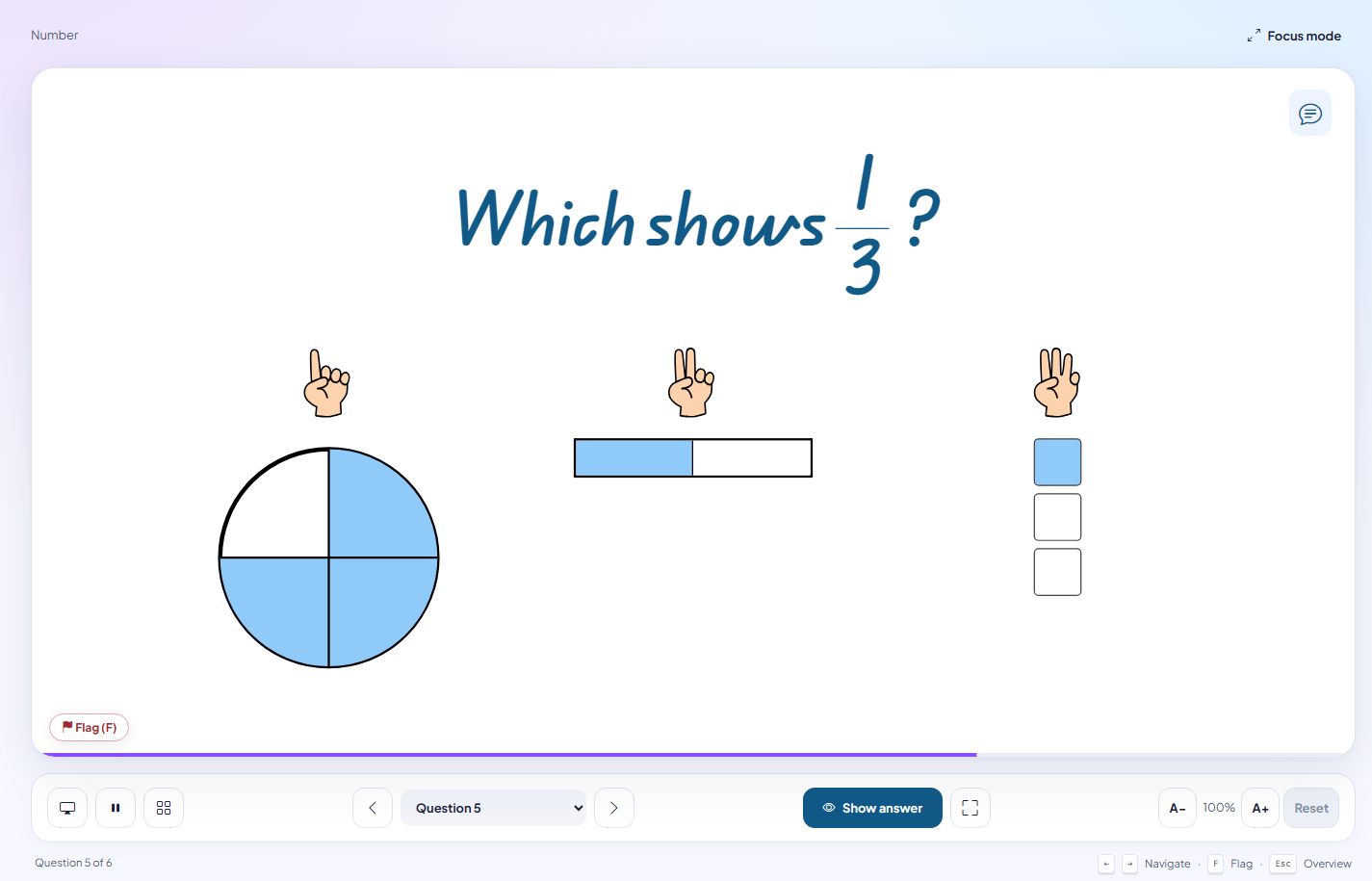
Demo question 5 asks which picture shows one third. Hand signals label three options; Focus mode, Flag, Show answer and text-size controls surround the slide.
Real demo / Question 5 / Classroom controls

The hand signals give students a shared response cue. Show answer lets you wait before revealing; Focus mode and A− / A+ help you check readability. These controls support the routine, but do not supply thinking time or check understanding for you.

  1. Pose & pause

    Recall what one third means before choosing. Give quiet thinking time.

  2. Respond together

    Use fingers, speech or an accessible alternative. Ask “Why option 3?”

  3. Reveal & check

    Explain one of three equal parts. Use boards or paper to check a drawing.

Pedagogy Pioneers Teaching fieldnotes / Mathematics

04 / Use the evidence

An answer is a clue.
Ask about the thinking.

Feedback is useful when students can understand it,
act on it and meet the idea again.

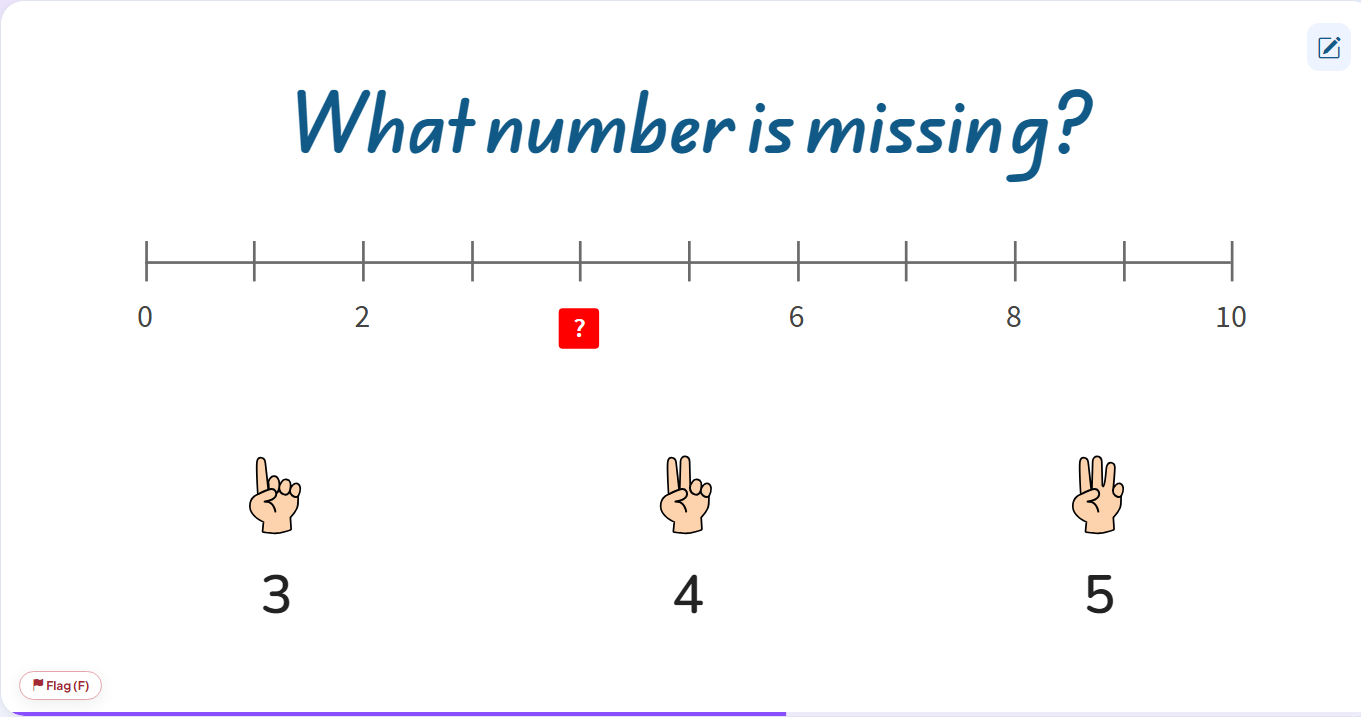
1 / Think before the revealDemo question 4: a number line from zero to ten has a missing label at four, with answer options three, four and five.
Ask for the missing number, then how students used the scale. Wait before revealing.
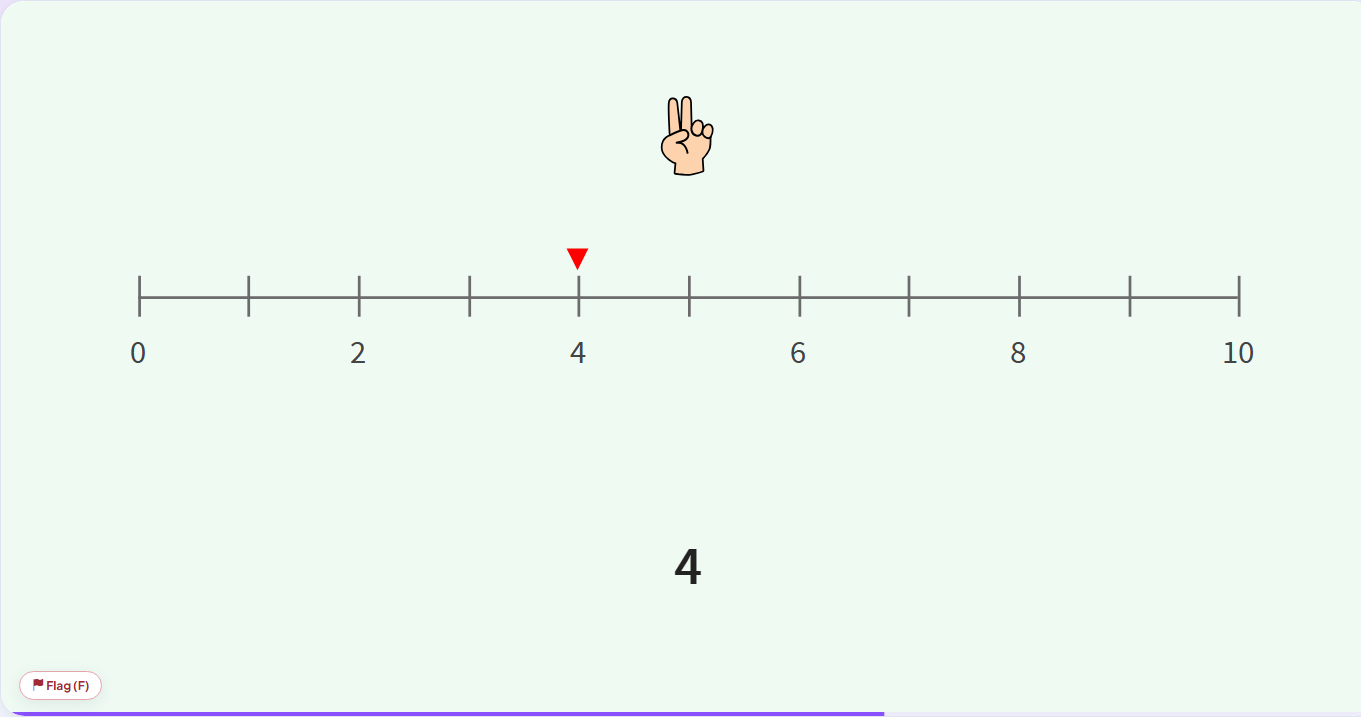
2 / Check against the answerThe corresponding answer slide marks four on the number line and displays the numeral four.
The answer confirms 4. Ask students to explain the intervals, not simply copy the numeral.

Real demo / Question 4 and its answer. If needed, model counting equal intervals from 2 to 4, then check a new example without options. The answer slide supplies feedback, not a worked explanation; you provide the reasoning and schedule a later retrieval.

Make a proportionate next move [3] [4]

Match observed responses to a teaching action
What you noticeWhat you might do
Secure answers
and reasoning
Acknowledge the strategy. Revisit after a gap and check application in another context.
Mixed responsesCompare approaches, clarify a key step and check a similar question.
A shared misconceptionModel with a familiar representation. Flag for explicit reteaching if a fuller lesson is needed.
A few students
need support
Check prerequisites and language. Offer an accessible response and targeted follow-up.
Pedagogy Pioneers Teaching fieldnotes / Mathematics

05 / Make it sustainable

Start small.
Build the habit.

The first goal is a routine you can sustain
and students can use with confidence.

Your first week: a flexible starting point

Before
day one

Plan the learning, then the slides.

Choose a small set of taught content. Preview visuals, prepare materials and check the display.

Days
1–2

Teach the participation routine.

Practise quiet thinking, responding on cue and correcting an answer. Keep the set short.

Days
3–4

Return to earlier learning.

Revisit selected skills after a gap. Ask for explanations and adjust support using responses.

Day
5

Check what is becoming more secure.

Revisit a flagged idea with a different example. Plan the next review or targeted lesson.

Before you press “Show answer”

  • The content and prerequisites have been taught.
  • The prompt, options and visual are clear and readable.
  • Everyone has time and an accessible way to respond.
  • I will check the reasoning, not just count correct choices.
  • I know how I will respond if students are not yet ready.

Saved links let you return to a review. Signed-in members can edit a copy and export a PowerPoint; exported slides are images rather than editable question text.

Pedagogy Pioneers Teaching fieldnotes / Mathematics

06 / Read further

Evidence into practice.
With professional judgement.

The principles behind this guide, and where
to explore them in more depth.

These sources inform the guide's practical suggestions. The exact routines, timings and examples here are not a separately evaluated intervention.

  1. [1]

    Spacing and retrieval practice guide

    Australian Education Research Organisation (AERO), 2021.

    Low-stakes retrieval, spacing and feedback.

    Read AERO's spacing and retrieval guide
  2. [2]

    Cognitive load theory: Research that teachers really need to understand

    Centre for Education Statistics and Evaluation (CESE), NSW Department of Education, 2017.

    Memory, worked examples and the changing needs of more knowledgeable learners.

    Read CESE's cognitive load review
  3. [3]

    Teach explicitly

    Australian Education Research Organisation (AERO), practice guide.

    Explanation, modelling and guidance to manage cognitive load.

    Read AERO's explicit teaching guide
  4. [4]

    Monitor progress

    Australian Education Research Organisation (AERO), practice guide.

    Checking understanding and adapting instruction and feedback.

    Read AERO's progress monitoring guide
  5. [5]

    Improving students' learning with effective learning techniques

    Dunlosky, J., et al. (2013). Psychological Science in the Public Interest, 14(1), 4–58.

    Review of learning techniques, including distributed, retrieval and interleaved practice.

    Read the research review (DOI)

Daily Review / A teacher's field guide
Pedagogy Pioneers · November 2026

Research links accessed 9 November 2026.
pedagogypioneers.com